Latest News    

Political Science Department

Teachers Profile

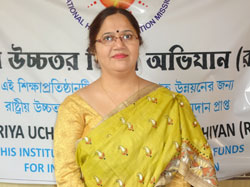
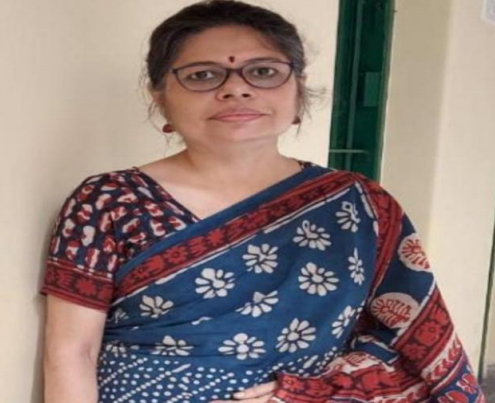
Teacher Image

DR. NIBEDITA RAHA

Associate Professor

View Details
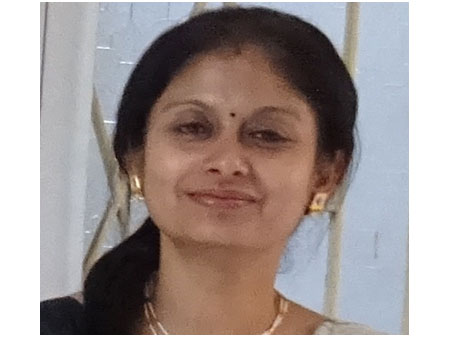
Teacher Image

DR. PRIYADARSHINI SIRCAR

Associate Professor

View Details
Teacher Image

DR. JAYITA MUKHOPADHYAY

Associate Professor

View Details
Teacher Image

Dr. Piyali Basu

Associate Professor

View Details

About

❖  Started in 1961
❖  4 Faculty Members
❖  Eventful Department with Seminars & Field Work
❖  Fairly good University level results
❖  Departmental Library 
❖  Continuous evaluation of the students on the basis of paper presentation, field study – evenly distributed over the entire period of study.

A GLORIUS PAST

The Department of Political Science came into existence in 1961 as a separate discipline when the University of Calcutta introduced Political Science as a separate subject. Hence the new department of Political Science emanated from the old department of Economics with Prof. Subha Datta as the Head.
From the very beginning the department offered both the Major and Minor courses to the students. The department has been served by many illustrious teachers like Prof. Mohit Bhattacharya, Sm Subrata Ghosh, Sri. Anil Guha, Sri. Joyti Bhattacharya, Prof Bonita Aleaz, Dr.Sanghamitra Sen Chaudhuri and others who have earned respect and admiration of successive generations of students for the high quality of teaching, their love for students and commitment to the holistic progress of the students.

THE VIBRANT PRESENT

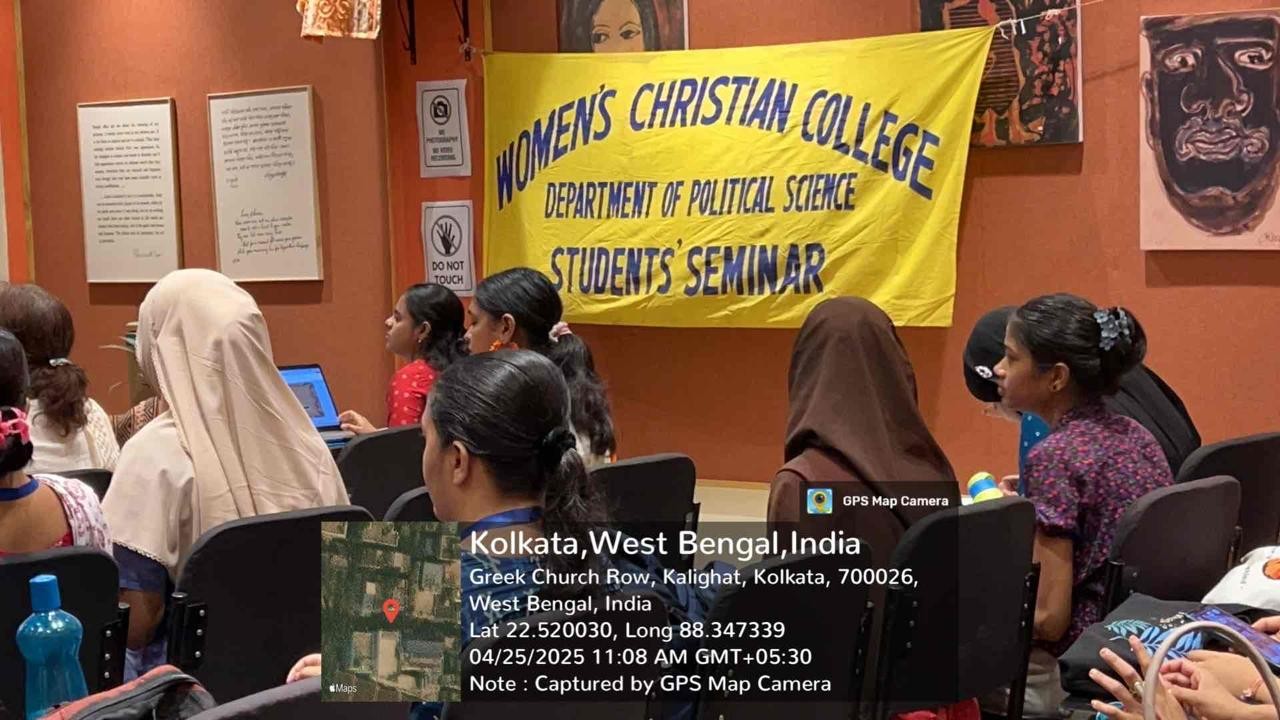
As a discipline, study of Political Science, both in Major and Minor course, is of much relevance in today’s world, as graduates from this department may proceed to a career in academics, may find themselves well equipped in succeeding in competitive examinations like WBCS, IAS, or may find positions in print and electronic media. The department is presently served by four permanent faculty members who are doing their best to carry forward the hallowed legacy of the department. The department stands out for the absolute regularity and punctuality with which classes are held, the sincerity and commitment of faculty members, regular monitoring of the progress of students , attention to the holistic development of students by ensuring their participation in field studies, students’ seminar, special lecture by eminent scholars, and so on. Our efforts have been rewarded by fairly and consistently good success rate of students in University Examination.

Best Practices

Objectives & Outcomes

                                                           SEMESTER -I

     DSC-1: Political Theory: Foundational Concepts

  Programme Outcomes:

1. This course introduces the basic concepts of politics.
2. The intention is to prepare the students for understanding the theoretical dimension of politics.
Course Outcomes:
After reading the course, students will
1. Understand the entry points through which the political is interpreted
2. Understand the core concepts that guide the theorisation of politics
3. Understand how theory relates to practice.

                                                        SEMESTER -II

  DSC-2: Constitutional Government in India

Programme Outcomes:

  1. To enable students to know the constitutional design of government and political institutions in India.
  2. To relate such institutions to the ideals of liberty, equality and justice, and to the process of decentralization and federalism, development and democracy, on which the constitutional democracy in India is visualized.
  3. To encourage students to see how institutional practices and constitutional design are impacted by the political contexts within which they unfold.
  4. To develop the ability to comprehend the relationships between constitutionalism, democracy and governance.


         Course Outcomes:

On successful completion of the course, students will develop:

  1. Understanding the specificities of Indian Constitutionalism.
  2. Familiarity with the issues concerning constitutional architecture, institutional design and practice of constitutional democracy.
  3. Awareness of the ways in which the government/s functions through its various organs at various levels.
  4. Understanding of the division of power between various organs of the government.


SEMESTER -III

  DSC-3: Political Theory: Approaches and Debates

Programme Outcomes :

The idea behind the course is to go beyond the conceptual foundations and introduce the students to:

  1. The idea of political theory, its history, and complementary and contending approaches
  2. Linkages of theories and debates
  3. Initiate them to assess the theories and debates critically

Course Outcomes:

By going through the course the students will be able to:

  1.   Be theoretically equipped to explain and critically examine political questions, political events and political phenomena encountered
  2. Reconcile political theory and practice through reflections on the ideas and practices of democracy


DSC-4: Politics in India I: Structures

Programme Outcomes:

This course, being complementary to the next core course(CC-5), seeks to stress on the structural dimensions of Indian politics, within which the political process operates. With the nature and trends in Indian politics background, it familiarizes the students with the ‘backbone’ of the political process.

 Course Outcomes: After completing the course the students will be able to understand:

  1. The systemic, ideological and programmatic aspects of political parties
  2. The rationale of major interest groups
  3. The electoral logistics
  4. The rationale and structural dynamics of civil service


                  SEMESTER -IV

  DSC-5: Politics in India II: Processes

   Programme Outcomes:

Being complementary to the previous course (CC-4) it is to impart an understanding of the political process in India by taking into consideration the change and continuity in social, cultural and economic dimensions and relations. The idea is to analyse the ways in which the processes simultaneously shape and are themselves shaped by the structural frameworks of politics.

    Course Outcomes:

At the end of the course students are to:

  1. gain insights into the interconnections between social, cultural and economic dimensions and relations and the political process in India.
  2. understand the challenges arising due to various ascriptive identities diversities
  3. analyse the changing nature of the Indian polity in the context of the above diversities.
  4. make sense of the specificities of the political processes in India in the light of operational and behavioural dynamics of the identity- and movement-based themes, issues and events

DSC-6: International Relations: Concepts, Theories

Programme Outcomes:

With the aim to provide a reasonably advanced introduction to IR concepts and theories course offers:

  1. In-depth and critical understanding of IR
  2. Conceptual and methodological dimensions
  3. Substantive foci
  4. Differing ways of problematisation.

      Course Outcomes:

  1. Demonstrate a sense of political agency
  2. Ability to think critically about fundamental concepts, processes and systems
  3. Application of knowledge gained for using major analytic and theoretical frameworks
  4. Demonstrate the ability to construct and evaluate analytical arguments and write clear logical prose

DSC-7: Indian Political Thought – I

Programme Outcomes:

This paper is designed for a mix of basic and intensive understanding of some important 

concepts and themes shaping Indian political thought. It takes off from the ancient times and navigating through the medieval period it reaches the modern era.


      Course outcomes:

After completion of this course, students will be able to:

  1. Acquaint themselves with the nature and form of statecraft of the ancient India.
  2. Explain the core ideas in Medieval political thought.
  3. Understand the landmark initiatives in Modern Indian political thought.
  4. Critically engage with the evolution of political thought in India over centuries.

DSC-8: Public Administration: Concepts, Theories

Programme Outcomes:

  1. Situates Public Administration in its historical context and acquaints students with key concepts of the discipline
  2. Facilitates understanding of some leading theories and models
  3. Updates on the changing nature of administration in post-globalisation era
  4. Introduces various techniques of public policy making and implementation.


    Course Outcomes:

On completion of this course, students will:

  1. Have a comprehensive understanding of the conceptual roots of the discipline
  2. Understand the ways and means of theorizing.
  3. Gain basic understanding of the importance of governing, governance and policy dynamics.

SEMESTER -V

DSC-9: Indian Political Thought II

Programme Outcomes:

  • To enable the students to understand the historical context and explore the rich and diverse tradition of political thinking in India in modern times.
  • To encourage the students know the valuable contributions made by Indian Political thinkers and philosophers
  •  To examine the key political ideas and concepts like justice, liberty, equality, socialism, and nationalism in the Indian context and to assess the influence of traditional and modern Indian political thought on contemporary political practices and institutions
  • To help students develop the ability to analyse and engage with theories presented by the thinkers and also to make a comparative study between Western and Indian Political Thought

Course Outcomes:

After completion of the course the students will be able to:

  • Gain an understanding of the historical and cultural contexts that have influenced Indian political thought in modern times.
  • Learn about the significant works and contributions of important Indian political thinkers and philosophers.
  • Study the impact of social and political movements on Indian political thought
  • Assess the role of the political thoughts in shaping these movements.

     DSC- 10: World Politics Since 1945

Programme Outcomes:

  1.  To impart an in-depth understanding of the key political, economic, and social developments since the end of World War II, keeping in mind the non-Western world.
  2. To analyse major international events, institutions, ideologies, globalization, and the emergence of new power configurations.
  3. To examine the role of key actors such as nation-states, international organizations, non-state actors, and regional blocs in shaping global governance and political trends.
  4. To develop critical thinking and analytical skills for understanding and interpreting complex political phenomena and historical trends vis-à-vis contemporary global issue


      Course Outcomes:

By the end of this course, students will be able to:

  1. Describe key events and turning points in world politics from 1945 to the present.
  2. Explain the ideological, economic and political foundations of the Cold War and its aftermath

    DSC- 11: Political Sociology

Programme Outcomes:

The course seeks to highlight the intersection of politics and society and to familiarise the students with essential conceptual-theoretical concerns and practical manifestations. The course is initiated with a focus on the bases of social power and in the process the topics have been embedded with the perennial questions of power, authority, and resistance as manifested in political institutions and political systems.

      Course Outcomes

The course will enable the students to:

  1. Relate political processes, political institutions, political issues, and political change with social/sociological dynamics.
  2. To understand and analyse the complexity of the aforementioned sub-themes, particularly in the broader contact of the State-society interface.
  3. To come to terms with an expansive notion of the ‘political’, a topic with which the syllabus begins in the first place.

DSC 12: Western Political Thought - I

Programme Outcomes:

  1. This course introduces the students to the key political philosophers from ancient Greece to the 18th century Europe.
  2. It explains the historical development and intellectual foundation of their view son key issues like state, society, and sovereignty.


Course Outcomes:

Students will be able

  1. To understand and analyse critically the arguments of the select political thinkers To contextualize and evaluate the relevance of their thought in reference to contemporary political society

        2.To contextualize and evaluate the relevance of their thought in reference to contemporary political society.

                                                           SEMESTER –VI

DSC-13: Western Political Thought –II

Programme Outcomes:

  1. This course introduces the students to the key political thinkers from liberal philosophical tradition and its competing theories in modern Europe.
  2. It explains the intellectual foundation of the central concepts like freedom, democracy, representation, constitutional government, and republicanism and the debates around it.

             Course Outcomes:

After reading the course, students will be able

  1. To understand and analyse critically the arguments of the modern political thinkers.
  2. To contextualize and evaluate the relevance of their thought in reference to contemporary political society.

DSC-14: Public Administration: Indian Context

Objectives:

The course begins with the historical roots to highlight various processes of Public Administration in India. It covers the core issues to enable the students to relate the theoretical dimensions with the concrete scenario in contemporary India. The course is intended to prepare students for careers in academia, media and public service


    Learning Outcomes:

  1. The students will be able to integrate theory with practices-à-vis administration.
  2. Analyse the evolution and development of Public Administration in India.
  3. Examine the structure, processes and culture vis-à-vis Indian administration.
  4. Initiate awareness of the role of Public Administration in policy-making and implementation in India.

DSC-15: Comparative Government and Politics -I

Course Objectives:

The idea behind the course is to introduce the students to:

1. The conceptual development of comparative government and politics, its genesis and contending approaches

2. To acquaint the student community with the basics of comparing political systems

3. To develop among them the understanding about comparison as a method in politics

4. Initiate them to develop critical knowledge about regimes, structures, functions and processes in politics


Learning Outcomes:

After completing the course, the students will be able to:

1. Be theoretically equipped to explain and critically examine political events and political phenomena encountered

2. Understand the rationale and dynamics of different political systems and the ideas and practices of democracy


IDC (INTER-DISCIPLINARY COURSE)(3 CREDITS – 2TH +1TU) SEMESTER I/II/III (PLSD -1)

IDC -1 - Understanding Governance

Course Objectives:

  1. This paper deals with concepts and different dimensions of governance highlighting the major issues in contemporary times.
  2. It will facilitate an understanding of the importance of the concept of and practice governance, which is essential for students across disciplines.
  3. It simultaneously focuses on environment, administration and development.

            Learning Outcomes:

  1. Students will be acquainted with the changing nature of governance in the era of globalization.
  2. Students will acquire knowledge of some of the most contemporary motive forces of governance.
  3. The students become familiar with a rigorous introduction to the best practices in India on governance.


SEC (SKILL ENHANCEMENT COURSE) --- FOR MAJOR/HONOURS (PLSM) (4 CREDITS– 2TH + 2TU)

SEMESTER I

             SEC-1 Democratic Awareness with Legal Literacy

Course Objectives: The Course intends to acquaint undergraduate students with different terms of the legal structure of India.

      Learning Outcomes:

  1. Improve working knowledge of affirming one's rights

Be aware of duties to explore opportunities and challenges for different sections of people

Semester -II

SEC-2 Understanding the Legal System

Course Objectives: This course design is intended to create:

  1. A systemic perspective on an overarching framework for approaching law as a skill-based subject.
  2. To focus on the enhancement of skill of ordinary persons to enable them to utilize legal knowledge in life.


Learning Outcomes: The programme is so designed as to:

  1. Acquaint, train and equip students with a reasonable knowledge of the legal system.
  2. Motivate the students to understand the principles, concepts and reason
  3. Form own opinion and articulate them in the interest of society at large.

       Semester-III

SEC-3 Legislative Practices and Procedures

Course Objectives:

The course will:

  1. Familiarise the students with the legislative process in India at various levels
  2. Provide elementary skills to aspire for being a part of legislative support team
  3. Expose them to real life legislative work.

Learning Outcomes:

The students will be able to:

  1. Understand complex policy issues, draft new legislation, track and analyse ongoing bills, make speeches and floor statements
  2. Write articles and press releases
  3.   Monitor media activities and develop understanding of the political process in a democracy.

            SEMESTER 7    

To Be noted: The 5 DSCC papers to be studied in the 7th semester of the Honours programme will be  identical with core papers to be studied by the students pursuing Honours with research paper

DSCC‐16: Governance and Public Policy in India   

 Course Objectives: By the end of this course, learners will be able to: <> Examine the historical evolution of governance in India from the post‐independence period to the present. <>

 Analyse the interplay between the state, market and citizens vis‐à‐vis public policy, with equity and access. 

  1. Understand key policy challenges and initiatives in urban and rural development. 
  2. Evaluate major public health, higher education, and digital governance policies in India, including their historical evolution and contemporary reforms. 
  3.  Critically assess the impact of privatization and globalization on public policy outcomes.
  4.   Develop the ability to interpret and critique policy frameworks, programs, and governance mechanisms in diverse socio‐economic contexts. 
  5. Learning Outcomes: After completing this course, students will be able to: <> Trace the trajectory of governance in India from the late 1940s to the present, and its impact on public policy. 
  6.  Identify and describe key issues in urbanization and rural development, and the role of flagship programmes.
  7.   Summarize the evolution of public health and higher education policies, and explain the significance of major committees, commissions, and policies. 
  8.  Outline the objectives and components of India’s digital governance initiative.


DSCC‐17: Comparative Government and Politics II  

 Course Objectives: By the end of this course, students will be able to:

  1.  Understand the classification of political systems and their defining principles across different national contexts.
  2.   Analyse the structures, conventions, and institutional mechanisms that underpin liberal and socialist systems. 
  3. Compare the roles, structures, and impacts of political parties and interest groups in diverse political settings. 
  4. Evaluate the organization and functioning of judiciaries across multiple systems.
  5.  Assess the relationship between citizens and the state, focusing on rights, duties, and political participation.
  6.   Examine the roles of bureaucracy and the military in governance, including conditions leading to military intervention in politics. <> Apply comparative political analysis to contemporary issues and debates in governance. Learning Outcomes: On successful completion of the course, students will be able to: 
  7.  Identify key classifications of political systems and explain the principles such as rule of law, separation of powers, checks and balances, judicial review, democratic centralism, and direct democracy tools. 
  8.  Describe the features of liberal, socialist, and social democratic systems, with examples from specific countries. 
  9.  Summarise the typology, features, and functions of political parties and interest groups in select countries. 
  10.  Outline the structures and functions of the judiciary in select countries.

DSCC‐18: Major Debates in Post Independence India ‐ 

Course Objectives: ¨ 

  1. This course explores critical debates that have shaped the political, social, and economic trajectory of India since independence. 
  2. ¨ It encourages students to engage with divergent perspectives on nation‐building, democracy, development, and identity politics.
  3.  ¨ Through key readings and discussions, students will critically examine contested issues around secularism, federalism, social justice, economic reforms, and national identity. 


Learning Outcome: The students will: 

  1. ¨ Familiarise themselves with pivotal debates witnessed in post‐independence India.
  2.  ¨ develop critical understanding of competing visions of Indian democracy and development. 
  3. ¨ will be able to analyse the role of state, society, and institutions in shaping contemporary India.
  4.  ¨ will cultivate critical reflections on unresolved and/or evolving debates in Indian public life.


Teaching Learning

Syllabus

SL NO SUBJECT VIEW / DOWNLOAD
1 Syllabus 2026

Capacity Building

Academic Activities

Certificate Courses

Awards

PRIZES WON

Students of the department has won prizes in Youth Parliament Competition, Essay competition and similar other activities. Many alumnae of the department are now placed in jobs in academia or private organizations and making significant contribution to society.

MOUs

A MoU was signed between the Departments of Political Science, Women’s Christian College and Deshbandhu College for Girls on 3.11.22 at 2;30 pm in Principal’s office. The primary purpose of the MoU is to exchange faculty members of both the departments of these two Colleges, collaborative activities in all academic endeavours and most importantly joint activities by the students.


Distinguished Alumna

Distinguished Alumni


  1. Dr.Dipti Biswas,Former Principal,Women’s Christian College
  2.  Dr. Mahua Das, former President, West Bengal Council of Higher Secondary Education.
  3. Nibedita Chatterjee, Associate Professor, Gangadharpur Mahavidyamandir
  4. Sampa Ghosh, Associate Professor, B. K. C. College, Kolkata. 
  5. Dr. Mili Chatterjee, former Research Associate, Jawaharlal Nehru University.
  6. Dr. Purba Sengupta, Research Scholar at Ram Krishna Mission, Kolkata.
  7. Ranjita Samaddar, Advocate,Alipore Court
  8.  Sriya Adhikari,Practicing Advocate, District Court and High Court
  9. Dipika Nath,PhD Scholar,Centre for Political Studies,Jawaharlal Nehru University


Result

Sl No Title Result View

Student Progression

Departmental Notices

Sl No Title Notice View

Research

RESEARCH

Dr.Nibedita Raha
Associate Professor

Research interest:

  • Election.
  • Indian Government and Politics
  • Women’s Studies
  • Research Methdology


Publications:

  • Raha,Nibedita(2003)TenthGeneral Election in West Bengal,Kolkata: Minerva.
  • Raha,Nibedita et.all.(eds.)Ambedkar’s Idea of Social Justice and Indian Polity(2018), Kolkata:Levant Books.
  • Paul,Ajanta,Raha,Nibeditaand Mitra,Nabanita(eds.),(2020)Environmental Concerns in India,Bolpur:Birutjatiyo Sahityo Sammiloni.
  • “Education among Scheduled Caste Girls: An Overview” in Rabindra Bharati Journal of Political Science,Vol.7,2005,pp.59-66.
  • “Access to GovernmntPolicies:An Insufficient Conditionfor Scheduled Caste Girls” in Images,Vol. 2, 2005-06, pp.83-89.
  • “Right to Life and Euthanasia in India” in Rabindra Bharati Journal of Political Science,Vol.IX, 2008 ,pp. 97-105.
  • “Judicial Activism in India” in Rabindra Bharati Journal of Political Science,Vol.X, 2009 ,pp. 48-55.
  • “Dalits and Human Rights in India” in Paul,Ajanta(ed.) (2013)The Rite of Wrongs,Burdwan:Avenel Press,pp.134-141.
  • ‘Dr.B.R.Ambedkar’s Idea of Social Justice and Indian Polity’ in Raha Nibedita et all .eds,(2018),Ambedkar’s Idea of Social Justice and Indian Polity,Kolkata:Levant Books,pp.164-173.
  • ‘Lingo O Hinsa:Bharat O Pakistan’ in Mukhopadhyay,Apurbamohan and Sen,Malika(eds.) (2023)Manabadhikar,Kolkata:Setu Prakashani,pp.45-69.
  • ‘Jati O Varna: Bharat O Dakshin Africa’ in Mukhopadhyay,Apurbamohan and Sen,Malika(eds.) (2023)Manabadhikar,Kolkata:Setu Prakashani,pp.70-92.
  • ‘Saoli Mitra’s Nathabati Anathbat:Some Reflections’ in The West Bengal Political ScienceReview,Volume XXIV,2022-23,pp.183-201.
  • SLM,HPS,Netaji Subhas Open University,February,2022.
  • BDP SLM HPS, Netaji SubhasOpen University,December,2022


Dr Priyadarshini Sircar Associate Professor


Research Interest

  • Indian Government and Politics
  • Political Theory
  • Political Thought
  • Public Administration
  • Environment and Politics
  • Forest Policy
  • Gender Studies


Joint Editor of the Book published by the Department of Political Science entitled ‘Dr .Ambedkar’s Idea of Social Justice and Indian Polity’.(2018)Kolkata: Levant Book.

Resource Person on a Five-Day Faculty Development Programme on Indigenous Knowledge Systems organized by IQAC of Women’s Christian College in collaboration with the Department of History . Presented a paper on’ People’s Participation in ForestManagement: Aspects and Challenges ‘on 12th June, 2023.


Dr. Jayita Mukhopadhyay Associate Professor

List of publications:

  1. A Probe into the status of Vital Public Institutions in India, Kolkata: Avenel Press, 2025. ISBN: 978-81-989957-7-3
  2. ASEAN’s Role in ConflictManagement: Potentialities and Pitfalls, Kolkata:Levant Books, 2010. Distributed by Sarat Book Distributors, Kolkata. ISBN 978-93-80663-05-0.
  3. ‘Ambedkar’s Idea of Social Justice and Indian Polity’, Edited by Nibedita Raha, Priyadarshini Sircar, Jayita Mukhopadhyay and Piyali Basu,Kolkata: Levant Books,2018. Pp. 29-40. ISBN 978-93-84106-98-0.
  4. Climate Changein South Asia:Unravelling the Conundrum, Edited by Dr. Mousumi Kar, Dr Jayita Mukhopadhyay and Dr Manisha Dev Sarkar, Routledge, ISBN 978-0-367-47812--4, Article in this book, ‘India’s commitment to counter climate change in South Asia: A Critical Evaluation’, pg 141-155. New York, 2022.

Papers in International Peer Reviewed/UGC Care Listed Journals:

  1. ‘Deconstructing women's agency in new social movements of post-colonial India: a relentless struggle to secure fundamental rights and human dignity,’ in InternationalJournal of Human Rights and Constitutional StudiesVol.11 No.3, 2024. Published online 5th July, 2024. https://www.inderscience.com/info/inarticle.php?artid=139803
  2. Identity of ‘Single Woman’ in India: A Narrative of Exclusion and Striving for Empowerment’, in International Research Journal of Social Sciences, Vol 5 (10), 1-5, October 2016. E-ISNN: 2319-3565


Papers in Referred/Peer Reviewed journals/International Journals

  1. Deconstructing women's agency in new social movements of post-colonial India: a relentless struggleto secure fundamental rights and humandignity, International Journal of Human Rights and Constitutional Studies, 2024. ISSN print 2050-103X,
  2. ‘An Interrogation of the Lingering Impact of the Pandemic on Women’s Education in India’, Sophos Journal, Vol-1, Issue-1, (May, 2024) Peer-Reviewed e-Journal of Multidisciplinary Studies, Women's Christian College, Kolkata.
     Page No: 24-31,Section: Article
     
  3. ‘Mahatma Gandhi’s Contribution to Women’s Empowerment in India’ in Lokayata, Journal of Positive Philosophy, Vol X, No 2, September 2019, ISSN 2249-8389, pp 48-53
  4. ‘India’s Growing Engagement with Pacific Island Nations: A Venture towards Peace, Prosperity and Regional Stability’, In Rabindra Bharati Journal of Political Science, Volume XII, 2019, ISSN 2393-8218, pp 126-144.
  5. ‘India’s Water Sharing Disputes with her South Asian Neighbours: A Challenge to Regional Peace and Development’ in The Indian Journal of Political Science, Volume LXXVI, No. 3, July- September, 2015, pp 661-664. ISSN 0019-5510.
  6. ‘‘Indian Diaspora in Southeast Asia: Predicaments and Prospects’, article in The Indian Journal of Political Science, pp 995-1002, Vol LXII, No. 3, July-September 2010, ISSN 0019-5510
  7. ‘Dr. B. R. Ambedkar’s Espousal of the Concept of Fraternity : A Socio-Political Imperative in Contemporary India’ in Inquest, Volume 4, December 2017, pp. 33-48. ISSN 2349-5472
  8. ‘India’s Bid for GrowingPresence in the Asia PacificRegion: Exploring the Underlining Narrative of Geo-Strategic Interests’, in Rabindra Bharati Patrika, Volume 19, 25th January 2017,pp 63-71, ISSN 0975-0037
  9. ‘Terrorism, State Response and the Human Security Conundrum in India’, in Socialist Perspective, vol 42, No 3-4, December2014-March 2015, pp 125- 133, ISSN 0970-8863.


Non-refereed but reputedjournals with ISSN:

  1. ‘ Contextualising Bankim Chandra Chattopadhyay’s Nationalist Discourse in Contemporary India’, in The West BengalPolitical Science Review’,Vol XX, No. 1, 2018,pp 063-082. ISSN 2230-8296.
  2. ‘Violent RhetoricPurveyed by IndianPolitical Parties: An Anathema for Democracy’ in peer reviewed journal, Inquest: A Journal of Social Science and Humanities, vol 1, Issue 2, December 2015, pp 210-222. ISSN 2349-5472
  3. ‘ Interrogating the Free Speech Debate in India’, Mulyayan, Bilingual journal, Vol 4,Issue 3, 15 May, 2016, ISSN 2347-6168
     
  4. ‘Contemporary Relevanceof Teachings and Ideas of Swami Vivekananda in Countering the Menace of Terrorism’, in The West Bengal Political Science Review, Vol. XIV, No. 2, July – December 2011, pp 298-303, ISSN 2230-8296


Chapters in knowledge based volumes by national level publishers with ISBN:


  1. Chapters, ‘Marks Purba Samajtantrik Chinta’ and ‘ Rajnitir Naribadi Dristibhangi’ in Paschatya Rastrachinta Parikrama’, edited by Amitava Roy, Kolkata: Avenel Press, 2026. ISBN978-93-47-26-25-31
  2. Chapters ‘ India and Leading Powers of the World: USA, China’ pp 181-228, and ‘India and Important Powers: Russia, Japan, , pp 229-274 in ‘India in the 21st Century: Foreign Policy Perspectives in a Complex World’, edited by Aneek Chatterjee, New Delhi, Atlantic Publishers, 2022.
    ISBN 978-81-269-3437-9
  3. Chapter ‘Interrogating the Severity of Covid 19 Pandemic in Mega Cities across the Globe: Need to move towards Sustainable Cities, pp 61-72, in Environment and its Sustainability in India:A Journey Through Recent Times, Edited by SenjutiSaha, Kolkata, Birutjatio Sahitya Sammiloni, ISBN 978—81-953-0673-2
  4. Chapter ‘Interrogating Water Security in South Asia:An Illusory or Obtainable Objective’, pp 120-137 in ‘South Asia: issues, Challenges and Prospects’, edited by Raj KumarKothari, Atlantic, new Delhi , 2022 ISBN 978-81-269-3401-0.
  5. Chapter ‘Indonesia’s involvement in ASEAN’s Conflict Management Procedure: An Unwavering Commitment’, in Cooperation and Conflict in Contemporary Southeast Asia: Global Powers, ASEAN and India, edited by Prof. Tridib Chakraborti and Prof Shibashis Chatterjee, , Bharti Publications, New Delhi, 2019, pp.216-24
  6. Chapter ‘Bankim Chandra Chattopadhyay’s Pioneering Contribution in our Nationalist Discourse’, in ‘Political Thinking in Indian Literature’, Edited by Sanjeev Kumar Sharma, Ahmedabad: BharatiyaVidyaBhavan, 2017, ISBN : 978-81-7276-456-2. Pp. 109-113.
  7. Chapter ‘Unnayan, Adhunikikaran, o Ganatantrikaran’ in text book on CBCS syllabus, ‘Tulanamulak Rajniti Parichay’, Edited by Amitava Roy, Kolkata: West Bengal Government Book Board, 2019, pp 66-82. ISBN 978-81-247-0779-1
  8. Chapter ‘Dr. B. R. Ambedkar’s Pursuit of Fraternity: An Unfulfilled Mission’, in ‘Ambedkar’s Idea of Social Justice and Indian Polity’, Edited by Nibedita Raha, Priyadarshini Sircar, Jayita Mukhopadhyay and Piyali Basu, Kolkata: Levant Books, 2018. Pp. 29-40. ISBN 978-93-84106-98-0 
  9. Chapter ‘Early Nationalist Phase of MN Roy: An Enquiry into the birth of a Maverick’, in M.N.Roy- Ideas, Practices and Possibilities in Indian Politics’, Edited by Parthapratim Sen and Arunima Ray( Chowdhury), Kolkata: Rohini Nandan, 2017. pp 36-43. ISBN 978-81-933615-3-5.
  10. Chapter ‘India’s Water SharingDisputes with its Neighbours: A Challenge to its Regional Ascendency’, in the book ‘India Becoming a Global Power in the Twenty-first Century’, Edited by Rajkumar Kothari and Eyasin Khan, New Delhi: Atlantic, 2016, pp 192-202. ISBN 978-81-269-2190
  11. Chapter ‘Bidesniti Samparkita Kaekti Dharana’ in the book ‘Antarjatik Samparka: Tatwa O Bishay’, Edited by Parthapratim Sen and Arunima Ray(Chowdhury). Kolkata: Levant Books, 2015, pp.56-66. ISBN 978-93-84106-35-5
  12. Chapter ‘South East Asia as the Second Front of Terrorism: Predicaments and   Prospects’ in the book ‘The Terrorists’ World: Ideas and Interpretations’ Edited by Parthapratim Sen and Arunima Ray(Chowdhury). Kolkata: Levant Books, 2014. PP 82-99. ISBN 978-93-80663-92-0.
  13. Chapter ‘China-ASEAN Relations: A Journey from Animosity to Amity in the book ‘China and the Contemporary World’ edited by Tridib Chakrabarty, Sumita Sen, Herkan Neadan Toppo and Bijay Kumar Das, Kolkata: Readers Service, 2014. PP.211-224. ISBN 978-93-82623-13-7
  14.   Chapter ‘Paramanabik astra pratijogita o nirastrikaran’ in the book ‘Samasamayik Antarjatik Samparka’ (A book in Bengali) edited by Gautam Kumar Basu , Kolkata:Paschimbanga Rajya PustakParisad, (West BengalState Book Board) 2013. PP 50-85. ISBN 978-81-247-0706-7.
  15. Chapter ‘manabik hastakhep’in the book ‘Samasamayik Antarjatik Samparka’ (A book in Bengali) edited by Gautam Kumar Basu , Kolkata: Paschimbanga Rajya Pustak Parisad, 2013. PP 50-85. ISBN 978-81-247-0706-7.
  16. Chapter ‘Human Rights Activism in the Internet: A Matrix Revolution’ in the edited volume ‘The Rite of Wrongs : Human Rights in India’ edited byAjanta Paul, Kolkata: Avneel Press, 2013. pp.311-320.ISBN 978-93-80761-33-6
  17. Chapter ‘India and APEC: The Rewards of Prospective Partnership’ in the edited volume “Emerging India as a Global Player: Growing Ties and Challenges” Editedby Raj Kumar Kothari, New Delhi: Atlantic Publishers, 2012. ISBN 978-81-269-1683-2.pp. 289-300


Minor Research Project:

Have completed Minor Research Projectapproved by UGC on ‘India’swater sharing disputes with its neighbouring states:A Challenge to Development and Regional Peace’.UGC reference no. PHW 75/12-13 dated 5.2.2013. Approved Rs 77,000.Received Rs 53,500.Started on 15.05.2013, ended on 5.11.2014. Submitted on 29.1.2015..Result published in the journal of Indian Political Science Association.


Refresher/Orientation Courses:

  1. Participated in UGC sponsored Refresher Course in ‘Contemporary International Relations: Trends and Perspectives’ organized by UGC- Academic Staff College, Jadavpur University, from 2nd February to 21st February, 2015 and obtained Grade A
  2. Participated in UGC sponsored Refresher Course in ‘Global Changes and Contemporary India’ organized by UGC- Academic Staff College, Jadavpur University, from 4th January to 27th January, 2010 and obtained Grade A. Articles/OP-Ed in The Statesman, Kolkataand Delhi


  1. India and Israel, 15th March, 2026.
  2. We, the People, 12th January, 2026
  3. Gen Z’s Challenges, 27th October, 2025
  4. Straits of Discord, 30th June, 2025.
  5. Nation in Turmoil 18th December, 2024.
  6. Of Justicefor All, October 14, 2024
  7. Answer to Cancer, 11th July, 2024
  8. Battle or Dignity, October9, 2022.
  9. Russian Muddle, Part I and Part II, 17th and 18th March, 2022
  10. The Handout Route, September 20, 2021
  11. Lacklustre Performance by Election Commission, May 13, 2021
  12. Environmental Issues,February 21, 2021
  13. A Chancefor India, November11, 2020
  14. Life After Corona, October6, 2020
  15. Towards a New World,August 10, 2020
  16. Time to Press the Button, March 4, 2019
  17. A BarbaricElection, June 2, 2018.
  18. Ambedkar’s visionof a secular Constitution, April 6, 2018.
  19. A vote for Mr Modi, March 23, 2017.
  20. Health of the Republic.February 18, 2017
  21. Brutality and Dreams, June 3, 2017.
  22. The GreatestChallenge, Climate Change, September 10, 2017.
  23. Oceanic Semantics, November 23, 2017. 
  24. The Man and His Mission: Dr BR Ambedkar, April 14, 2017.
  25. Crisis of fraternity, January16, 2016.
  26. Death of a dream, July 17, 2016.
  27. Listen to India’ Daughter,22 March, 2015.
  28. Relevance of Gandhi, 27 March, 2014.
  29. Nor Any Drop to Drink, April 25, 2012.
  30. Humanitarian Intervention, August 18, 2011.
  31. Goddess of Politics. 16 August 2010.
  32. Nuclear Cooperation, August 25, 2010.
  33. Democracy in Myanmar, June 24, 2010.
  34. Power of the finger,2nd June 2009.


Article/Op-ed in Bengali NewspaperEi Samay,

‘Durnitir barbaranter parokhakaran ki sangrakhan, Co-writer, Dr. MausumiKar, November 11, 2024.

Article in National Magazine:

Mahakumbha 2025:Dharmanomics and its Aftermath, 18th June 2025.


Papers presented in International Conferences/seminars in India and Abroad

  1. Participated and presented paper at the World Congress of Political Science 2018 organized by IPSA (International Political Science Association) held at Brisbane , Australia between 21-25 July 2018 and the title of the paper was ‘India’sbid for better Engagement with Pacific Island Nations: An attempt to counter China’s Growing Hegemony in the Indo-Pacific’.
  2. Presented a paper on ‘Examining the Viability of BIMSTEC in Promoting Indo-Bangladesh Cooperation: A Promising Venture’, in an International Conference on Indo-Bangladesh Relations in the 21st Century, organized by Department of Political Science, University of Kalyani, West Bengal, India, in collaboration with ICWA, ICSSR and MAKAIAS during 8-10th November 2017.
  3. Participated and presented paper at the World Congress of Political Science 2016 organized by IPSA (International PoliticalScience Association) held at Poznan,Poland between 23-28 July, 2016, and the title of the paper was Maoist Insurgency in India: An Offshoot of Skewed Development Process.
  4. Presented paper on ‘Violent Rhetoric and Indian Political Parties in 21st Century: An Anathema for Democracy’ in the International Conference on ‘Elections and political Parties in South Asia : A 21st CenturyPerspective’, organized jointlyby Department of Political Science, University of Kalyani, West Bengal, India and Research Committee 23, International Political Science Association during 7-9 December, 2015, at University of Kalyani, West Bengal, India.
     
  5. Presented paper on ‘Indonesia’s Involvement in ASEAN’s Conflict Management Procedure: An Unwavering Commitment’ in International Seminar on Southeast Asia in the Emerging Global Order:challenges and Opportunities organized by Department of international relations, JadavpurUniversity, Kolkata under UGC-CAS-I Programme between 16-18 February, 2013.
  6. Presented paper on ‘Politicking over water tax in West Bengal: Bane for Water Conservation’ at an International Conference on Dimensions of Development and Resource Conservation, organized by the Department of Geography, University of Calcutta under the UGC-DRS programme on 12 March, 2012.


Papers/ Invited lecturesin National/State/Local Level Seminar:


  1. Presented an invited special lecture on ‘India’s Foreign Policy Dilemma in Russia – Ukraine Conflict’, arranged by the department of Political Science, South Calcutta Girls’ College, on 19th April, 2022.
  2. Presented an invited lecture on ‘Contemporary Status of Indian Women: Some Reflections’ in APC College, New Barrackpore, on 6th March, 2019.
  3. Acted as a resourceperson and judged students’ presentations in UGC-CPE sponsored National Conference on ‘Secularism-Current Trends’,organized by BijoyKrishna Girls College, Howrah, on 16th -17th March, 2018,
  4. Presented a paper on ‘Dr. B. R. Ambedkar’s Propagation of the Concept of Fraternity: An Antidote to Divisiveness’ in the 57th All India Political Science Conference on Emerging India during 15-17th December, 2017 organized at Anna Centre for Public Affairs, University of Madras, Chennai, Tamil Nadu, in collaboration with Indian Political Science Association.
  5. Presented an Invited lecture on ‘Early Nationalist Phase of M.N. Roy: Birth of a Maverick’ in a UGC Sponsored NationalLevel Seminar on M.N. Roy: Ideas, Practices and Possibilities organized by Vidyanagar College,South 24 Parganas, West Bengal on 24th and 25th September, 2016.
  6. Presented paper on ‘Women vis-à-vis Maoist Insurgency: A Complex Narrative’ in a UGC sponsoredNational Seminar on Women Empowerment: A Third World Perspective organized by Department of Geography, SivnathSastri College, Kolkatain collaboration with Centre for Studies in Social Sciences, Kolkata,
  7. Presented an Invited Lecture on ‘Seminal Contribution of Bankim Chandra Chattopadhyay in our Nationalist Discourse’ in the National Seminar on Political Thinking in Indian Literature, organized jointly by Department of Political science, CCS University, Meerut, Indian Political Science Association and Bharatiya Vidya Bhavan, on 13-14th February, 2016 at CCS University, Meerut.
  8. Presented paper on ‘Hate Speech and Denigration of Political Culture: A nemesis for Indian Democracy’ in the National Seminar on ‘Recent Trends in Indian Politics’ organized by Department of Political Science, University of Gaur Banga at Malda, West Bengal on 22nd January, 2016.
  9. Presented paper on ‘Water Scarcity, Political Belligerence and Resultant Instability in South Asia’ at UGC SponsoredNational Level Seminar on ‘Water: A Threatened Social Resource of the Century’ organized by Department of Geography, Women’sChristian College, Kolkata, In Collaboration with Institute of Environmental Studiesand Wetland Management, Department of Environment, Government of West Bengal, on 9th October, 2015, held at the premises of Women’s Christian College.
  10. Presented paperon ‘India’s Water Sharing Disputeswith her SouthAsian Neighbours: A Challenge to Regional Peace and Development’ at 56th All India Political Science Conference of the Indian PoliticalScience Association organizedby the Department of Political Science, Banaras Hindu University, Varanasi on 25-28th October, 2015.
  11. Presented paper on ‘Water Tax in West Bengal:Its Impact on Water Conservation’ at a national seminarorganized by Department of Geography, Visva Bharati, West Bengal, from 1 March to 2 March, 2014.
  12. Presented paper on ‘A Message of Peace On 9/11’ in a UGC Sponsored National Seminar on Teachings and Ideas of Swami Vivekananda organized by Vivekananda College for Women, Barisha, Kolkata-700080 and Vivekanana College, Thakurpukur on 11th and 12 th April 2012.
  13. Presented paper on ‘China – ASEAN Relations: A journey from Animosity to Amity’ inthe National Seminaron China and the Contemporary World organized by the Centre of Advanced Studies, Dept. of International Relations, Jadavpur University, on 5th March, 2010 in the Seminar Hall, Dept. of IR, Ground Floor, P.G. Arts Building


Papers presented in State Level Seminars/ conferences:

  1. Presented a paper on ‘Interrogating growingdisregard for VitalInstitutions in India: AThreat to Democracy’, in the 18th Annual Conference of West Bengal Political Science Association, held at Rabindra Bharati University, Kolkata, on 4th-5th March, 2017.
  2. Presented paper in 17th Annual Conference of West Bengal Political Science Association held at Ananda Chandra College, Jalpaiguri, on 5th-6th March, 2016, and the titleof the paper was, ‘Exploring the Ramifications of the Ideal of Fraternity in the Indian Context’.
  3. Presented paper on ‘Social Media as a mobilizing tool in Indian Politics’ at the Annual Conference of West Bengal Political Science Association held between 29-30 March, 2014 at Lady Brabourne College, Kolkata.
  4. Presented paper on ‘Indian Diaspora in Southeast Asia: Predicaments and Prospects’in the 12th Annual Conference and Annual GeneralMeeting of the West Bengal Political Science Association held on 13 June 2010 at Surendranath College, Sealdah, Kolkata.


Dr.Piyali Basu

Associate Professor


Recent Publications:

Dynamics of Opposition Politicsin West Bengal: 1998-2011, Progressive Publishers, Kolkata, June, 2019. ISBN 81-80643-10-7

Basu P. (2019) State Sovereignty and Stability: Conflicting and Converging Principles. In: Romaniuk S., Thapa M., Marton P. (eds) The Palgrave Encyclopedia of Global Security Studies. Palgrave Macmillan, Cambridge.

https://link.springer.com/rwe/10.1007/978-3-319-74336-3_290-1

“Globalisation and Environment in India: Challenges to Sustainable Development”, in Tanaya Majumdar and Anwesha Chattopadhyay (ed.), Globalisation and India’s Transformation,

Crescent Publishing Corporation, 2019,pp. 62-80.     ISBN: 978-93-8753-25-5

“India’s path towards Digitalisation: Move towards fostering Indian Democracy” in Anwesha Chattopadhyay and Tanaya Majumdar (ed.), “Digitalisation: The Global Force Breaking all the Trends, Crescent Publishing Corporation, 2019,pp. 159-172.  ISBN: 978-93-87537-34-7

"Ecological Movements for Sustainable Development: Narmada Bacho Andolan and Consolidation of Democracy in the Narmada Basin", in Ajanta Paul et al(ed.), Environmental Concerns in India, Birotate Sahitya Sammi Loni, Kolkata, 2020, pp.19-41 ISBN:978-81-949426-0-3.

"Smart Cities: An Indian Perspective", in Anwesha Chattopadhyay (ed.), Modern City Spaces, Crescent  Publishing   Corporation,   New   Delhi,   2022,   pp.   22-40, ISBN: 978-93-91771-35-5.

 India’s Concern about China’s Rising Role”, Sophos, Peer-  Reviewed e-Journal of Multi-Disciplinary Studies (Online), Women’s Christian College, Kolkata, Vol.2, No.2,(May, 2025), pp. 75-82. ISSN NO.3049-2270 (Online)


Refresher/Orientation Courses:

  • Participated in UGC sponsoredOrientation Programme for College and University Teachers, organized by UGC- AcademicStaff College, University of Calcutta, from July 17-August 12, 2006 and obtained Grade A.
     
  • Participated in UGC sponsored Refresher Course, organized by UGC- Academic Staff College, University of Calcutta, in Political Science, from November 10-December 01, 2009 and obtained Grade A.
  • Participated in UGC sponsored Refresher Course, organized by UGC- Academic Staff College, University of Calcutta, in Political Science,from February 22-March 13, 2013 and obtained Grade A


Participated in UGC sponsored Inter-Disciplinary Refresher Course on “Studies in Peace and Conflict”, organized by UGC- Academic Staff College, Jadavpur University, from December 01- December, 22, 2017, and obtained Grade A.
Project

Facilities

Activities

Contact Us

Contact Us

POLITICAL SCIENCE 

EMAIL ID-  wccpoliticalscience1945@gmail.com